Fill Rate & Unfilled Requests
Every ad slot sends a request, but not every request comes back with a paid ad. Each round gives you numbers from a report. Work out the fill rate, or the setting that earns most, and shoot the right card before the clock runs out.
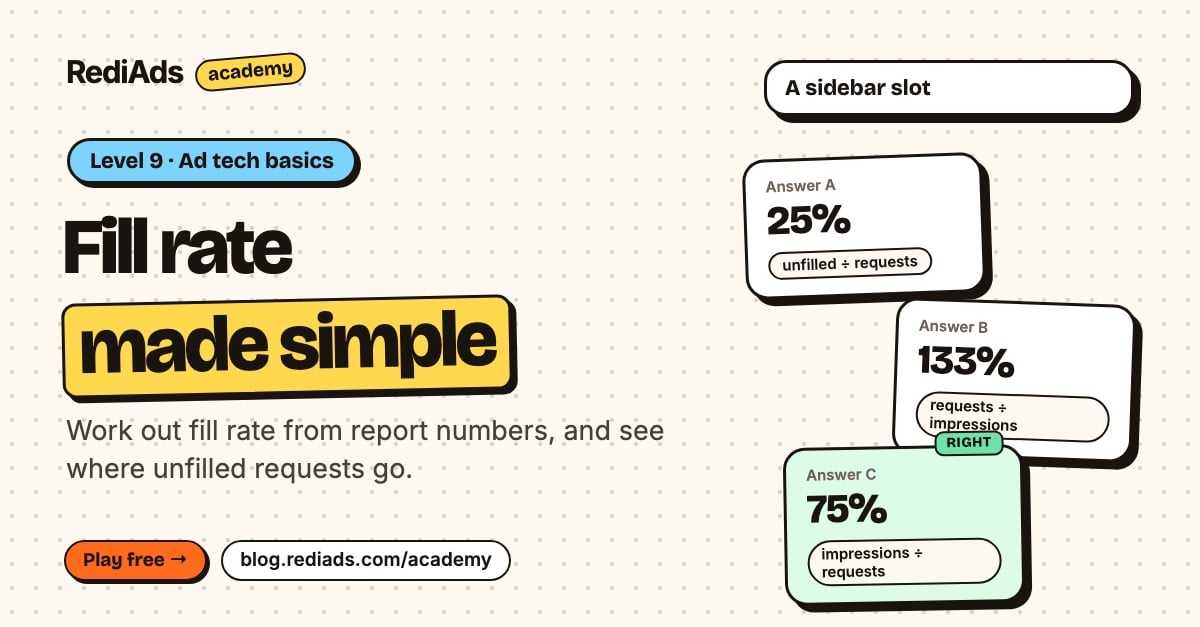
What you’ll learn
- How to calculate fill rate from requests and impressions
- Where unfilled requests go: passbacks, house ads or blanks
- Why 100% fill is not the goal
Requests vs impressions
An ad request is the page asking for an ad. An impression is an ad actually served. Fill rate is impressions divided by ad requests: 9,000 impressions from 12,000 requests is a 75% fill rate.
Where unfilled requests go
A request goes unfilled when no buyer wanted it, every bid was under the floor, or bids arrived too late. A network that cannot fill can return a passback so another source gets a try. If nothing paid serves, a house ad (your own promo, worth $0) can fill the slot, or it stays blank.
Fill is not the goal
A higher floor can lower fill and still raise total revenue, because the impressions that do sell earn more. Split fill rate by country, device and ad size to find where demand is weak.
Key terms
- Ad request
- The page asking the ad server for an ad for one slot.
- Fill rate
- Impressions ÷ ad requests.
- Passback
- A tag that hands a request a network cannot fill to another source.
- House ad
- Your own promo, served when no paid ad does; it earns nothing.
Level 9 leaderboard
No scores yet. Be the first on the board!