How an Ad Call Works
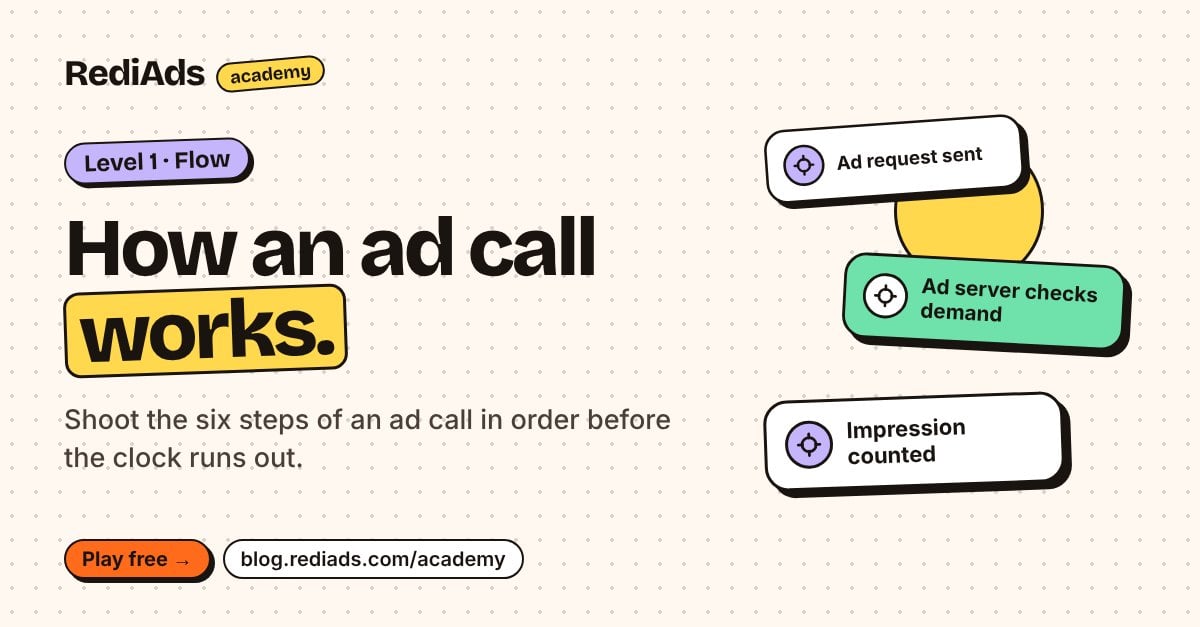
Every ad you see starts with the page asking for one. In about the time it takes to blink, the request travels to an ad server, demand is checked, a winner is picked and the ad is delivered. Put the six steps in the right order before the one-minute clock runs out.
What you’ll learn
- What an ad request is and who sends it
- What the ad server decides
- When an impression actually counts
What happens when a page loads an ad
When a reader opens a page, an ad tag in the page sends an ad request for each ad slot. The request carries the slot size, the page URL and signals such as device and location (subject to the reader’s consent choices).
The ad server makes the call
The publisher’s ad server (for example Google Ad Manager) looks at every source of demand that could fill the slot: direct campaigns, programmatic buyers and fallback networks. It runs an auction or a priority check and picks a winner.
From winner to impression
The winning creative is sent back and rendered in the slot. An impression is counted when the ad starts to render, which is why slow pages lose revenue: if the reader scrolls away first, nothing is counted.
Key terms
- Ad request
- The call a page makes to fill one ad slot.
- Ad server
- The system that decides which ad fills the slot.
- Creative
- The ad file itself: image, HTML or video.
- Impression
- One ad shown once. Most ads are priced per 1,000 impressions (CPM).
Level 1 leaderboard
- 1Jatin1,200