Header Bidding
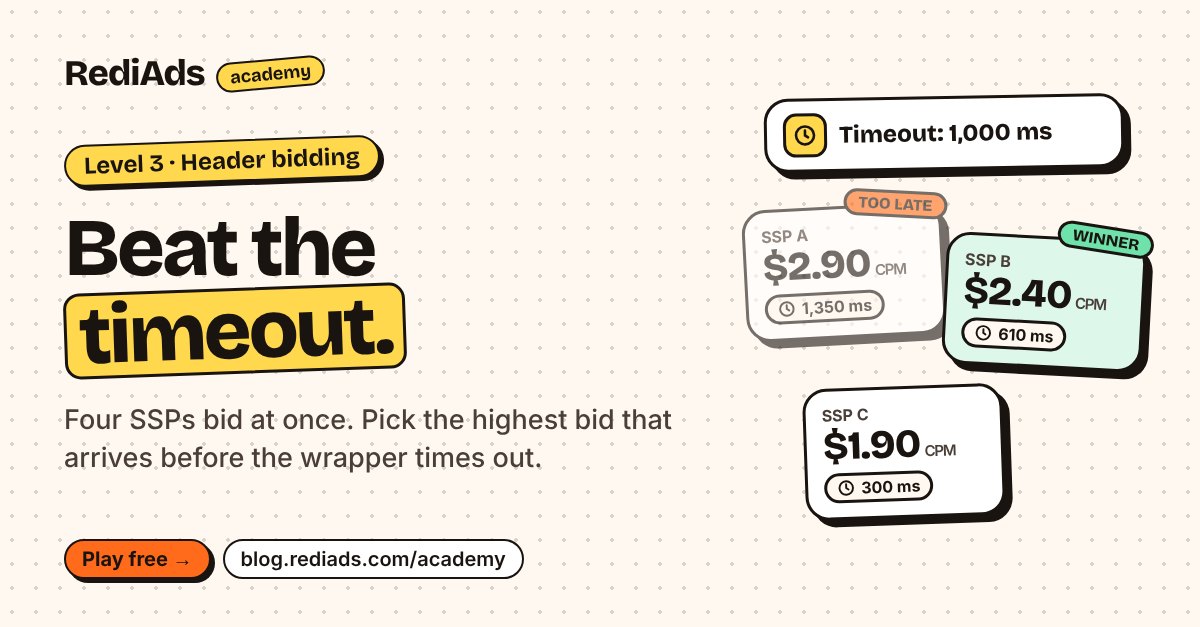
With header bidding, several SSPs bid for an ad slot at the same time, but the wrapper only waits until its timeout. Each round, pick the highest bid that arrived in time.
What you’ll learn
- What a header bidding wrapper does
- Why there is a timeout
- How header bids reach the ad server
Why header bidding exists
Before header bidding, ad servers offered impressions to buyers one after another in a fixed order (the “waterfall”). Header bidding asks many buyers at once, so they compete on price and the publisher earns more per impression.
The wrapper and the timeout
A wrapper such as Prebid.js runs on the page and sends bid requests to each demand partner (SSP). Because the page cannot wait forever, a timeout closes the auction; bids that arrive late are ignored.
Handing off to the ad server
The best header bids are passed to the ad server as key-values. The ad server compares them with its other demand, picks the winner and the ad renders. Running the auction on a server (Prebid Server) reduces the work done in the reader’s browser.
Key terms
- Header bidding
- Asking many buyers for bids at once before the ad server decides.
- Wrapper
- The code that runs the header auction, such as Prebid.js.
- SSP
- Supply-side platform: sells publisher inventory to buyers.
- Timeout
- The time limit after which late bids are ignored.
Level 3 leaderboard
- 1Jatin2,100