 1:09
Ep 5: DSP vs SSP: the buyer’s robot and the seller’s robot
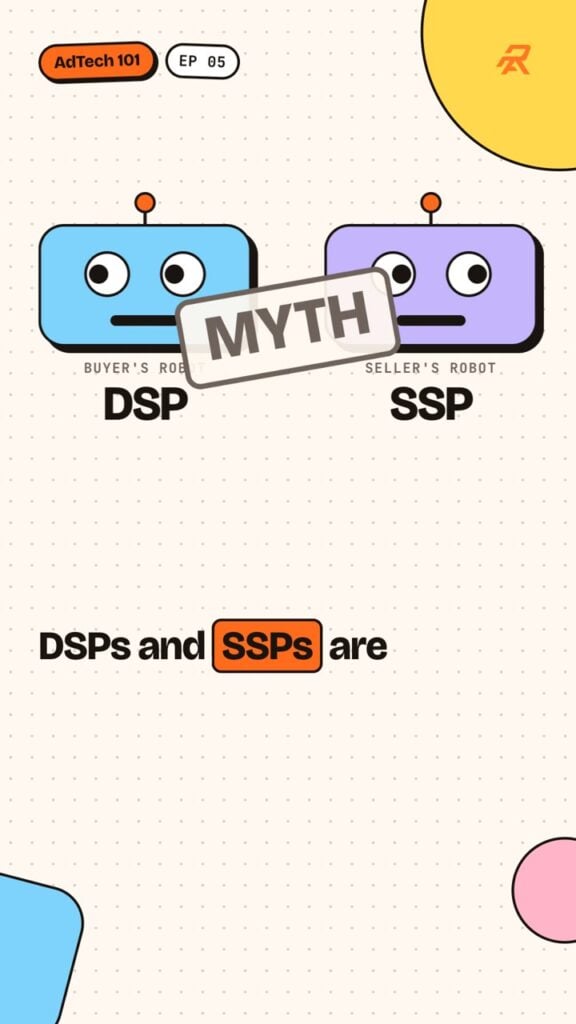
Myth. DSPs and SSPs are rivals. Actually, each needs the other.
Lesson notes
Myth. DSPs and SSPs are rivals. Actually, each needs the other.
A DSP buys ad space for advertisers. An SSP sells it for publishers.
Follow one impression on news.example. Your SSP packs it into a bid request. Page address, ad size, country, device, and a user ID if consent allows. It sends that to, say, twenty DSPs at once. Each one checks its advertisers’ campaigns. A travel brand’s DSP bids two dollars forty. A bank’s DSP bids one ninety. The SSP runs the auction, picks the top bid, takes its fee, and returns the winning ad to your page. Both sides speak one standard language, called OpenRTB. The DSP works for the buyer. The SSP works for you.
Open your ads.txt file, the public list of who may sell your ads. Most lines are SSPs.
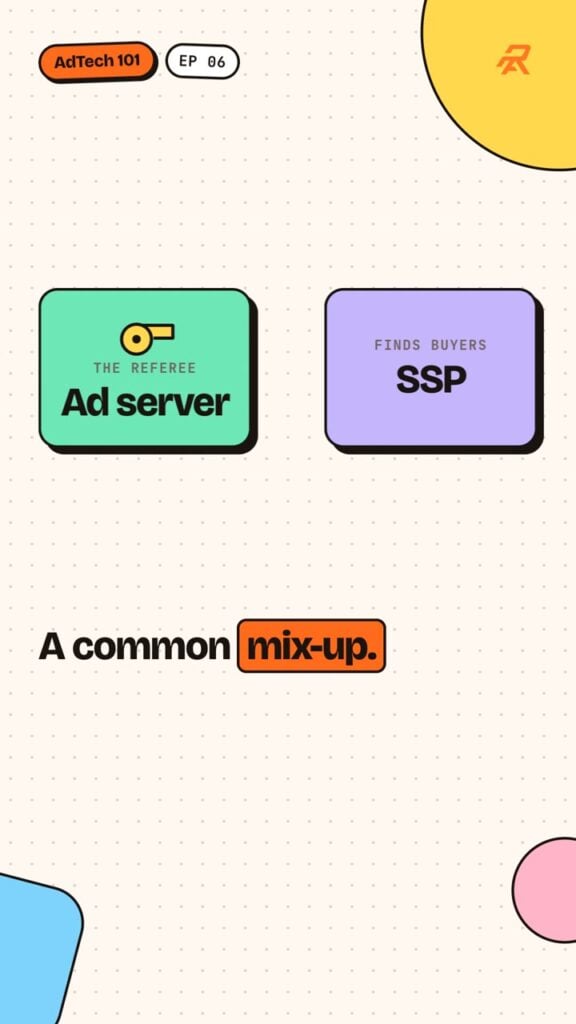
Next, your ad server is not an SSP.
 Go deeper · 5 min readUnderstanding Demand Side Platforms (DSPs)
Up next in this series
 1:04Ep 6: Your ad server is not an SSP
Ep 6: Your ad server is not an SSP
 1:13Ep 7: Ad network vs ad exchange
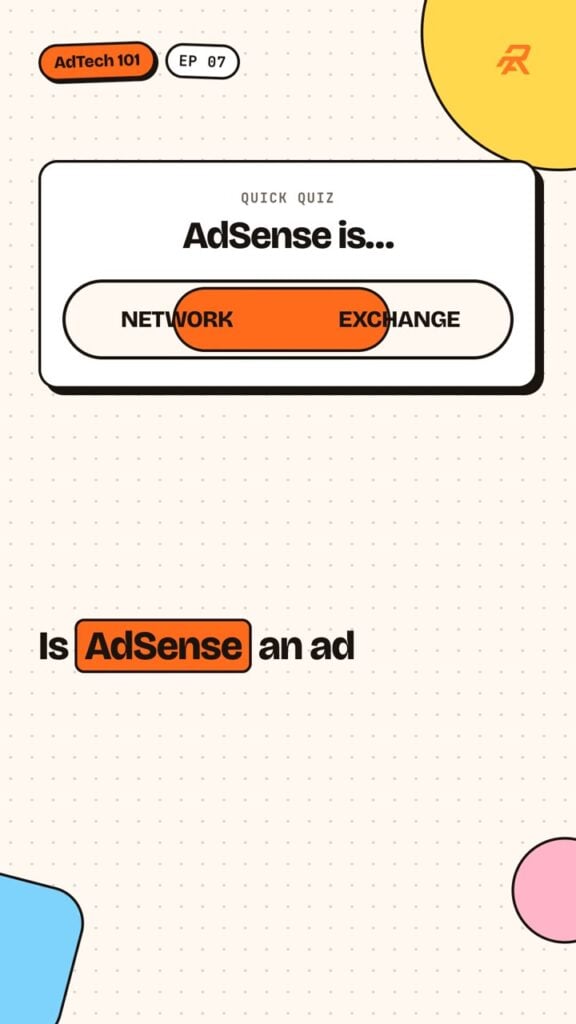
Ep 7: Ad network vs ad exchange
 1:14Ep 8: Direct-sold, programmatic, remnant
Ep 8: Direct-sold, programmatic, remnant
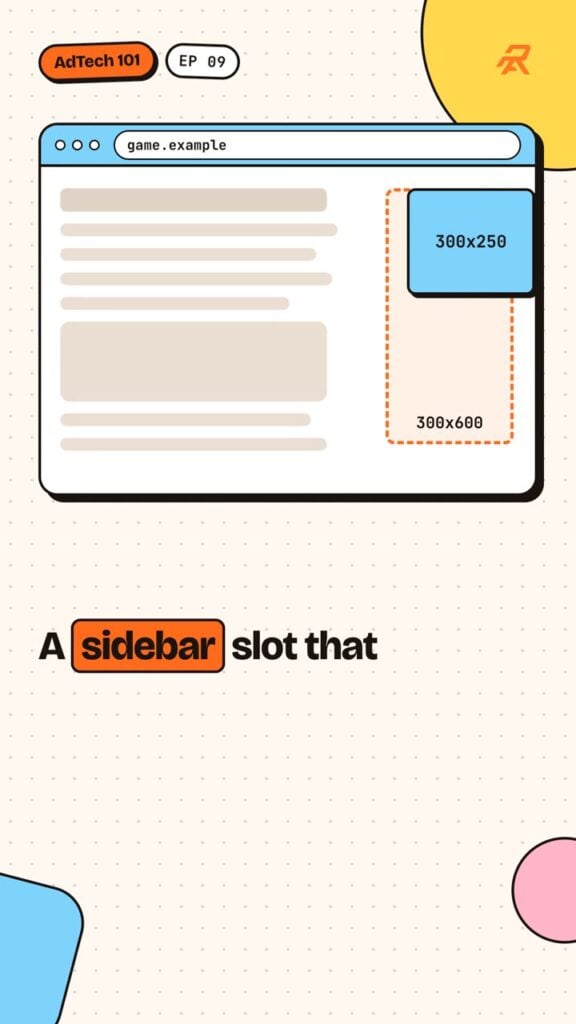 1:04Ep 9: Ad sizes that earn
Ep 9: Ad sizes that earn
 1:09Ep 10: Cookies 101
Ep 10: Cookies 101
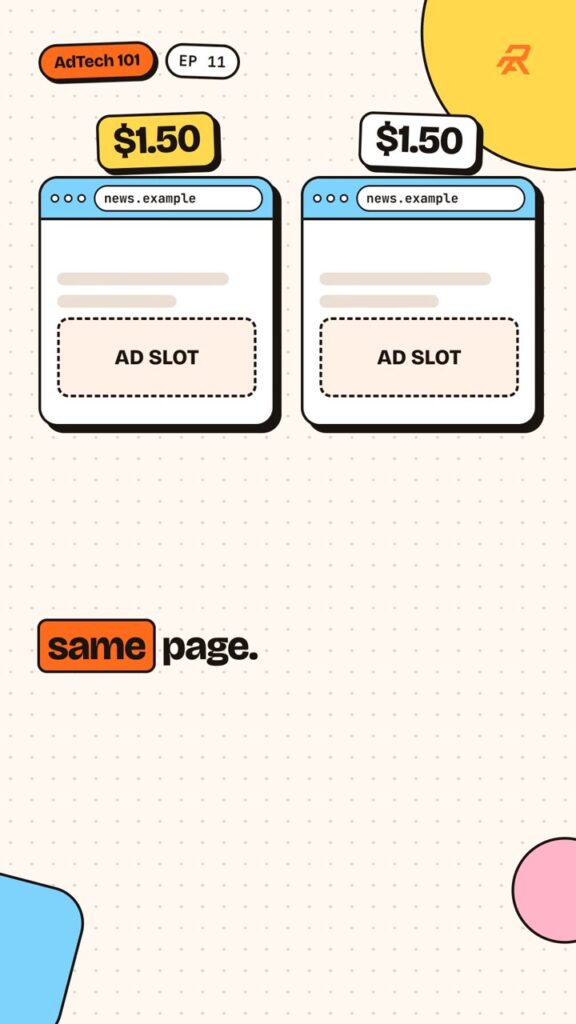 1:13Ep 11: Why identity changes your CPM
Ep 11: Why identity changes your CPM
 1:17Ep 12: Consent in 60 seconds
Ep 12: Consent in 60 seconds
 1:02Ep 1: Request, impression, viewable impression
Ep 1: Request, impression, viewable impression
 1:05Ep 2: CPM, eCPM, RPM: which number pays you
Ep 2: CPM, eCPM, RPM: which number pays you
 1:00Ep 3: Fill rate, the inventory nobody bought
Ep 3: Fill rate, the inventory nobody bought
 1:09Ep 4: The ad tech map in one picture
Ep 4: The ad tech map in one picture