 1:06
Ep 1: CMPs and the TC string
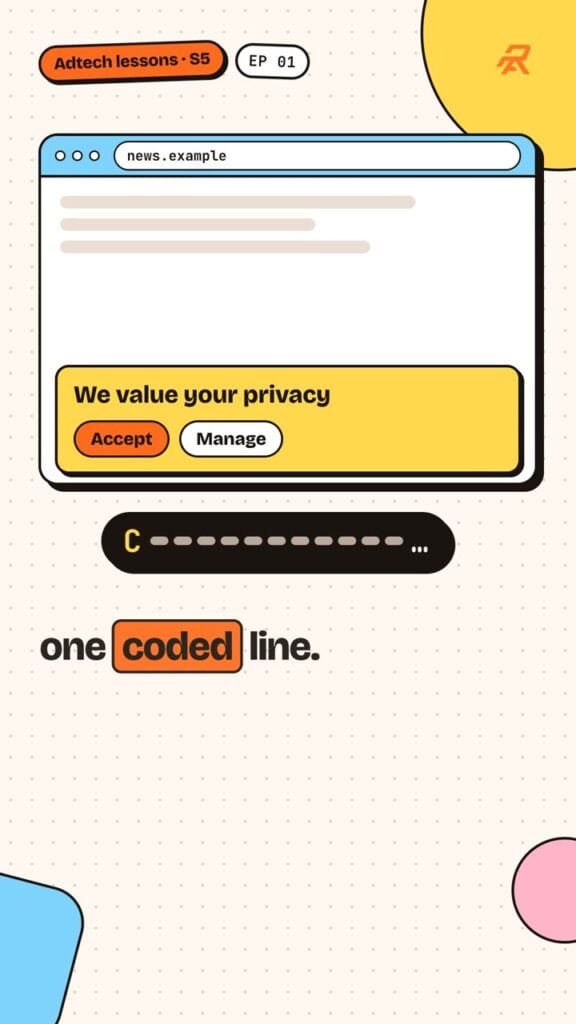
Your banner sends buyers one coded line. What's in it.
Lesson notes
Your banner sends buyers one coded line. What’s in it.
It’s the TC string. Your CMP, or consent management platform, writes it to record each visitor’s choices.
Say a reader in Berlin opens news.example. The banner lists numbered purposes, like purpose one, storing data on her device, and vendors, each with an ID. Google’s is seven five five. She says yes to purposes one, three and four, building and using an ad profile. The CMP stores each choice as a bit, one for yes, zero for no, and packs the bits into a short text string. Prebid.js attaches it to every bid request, with a flag saying GDPR applies. Each buyer checks its own bit.
Today, load your site as a European visitor and paste the string into a free TC string decoder. Check your key vendors are in it.
Next… TCF version two point three, and the February cutoff.
 Go deeper · 4 min readThe Impact of GDPR and CCPA on Ad Targeting
Up next in this series
 1:08Ep 2: TCF v2.3 and disclosedVendors
Ep 2: TCF v2.3 and disclosedVendors
 1:14Ep 3: No Google-certified CMP? No personalized ads
Ep 3: No Google-certified CMP? No personalized ads
 1:11Ep 4: US privacy: GPP replaced the US Privacy string
Ep 4: US privacy: GPP replaced the US Privacy string
 1:09Ep 5: GPC: the browser’s opt-out signal
Ep 5: GPC: the browser’s opt-out signal
 1:13Ep 6: Privacy Sandbox post-mortem
Ep 6: Privacy Sandbox post-mortem
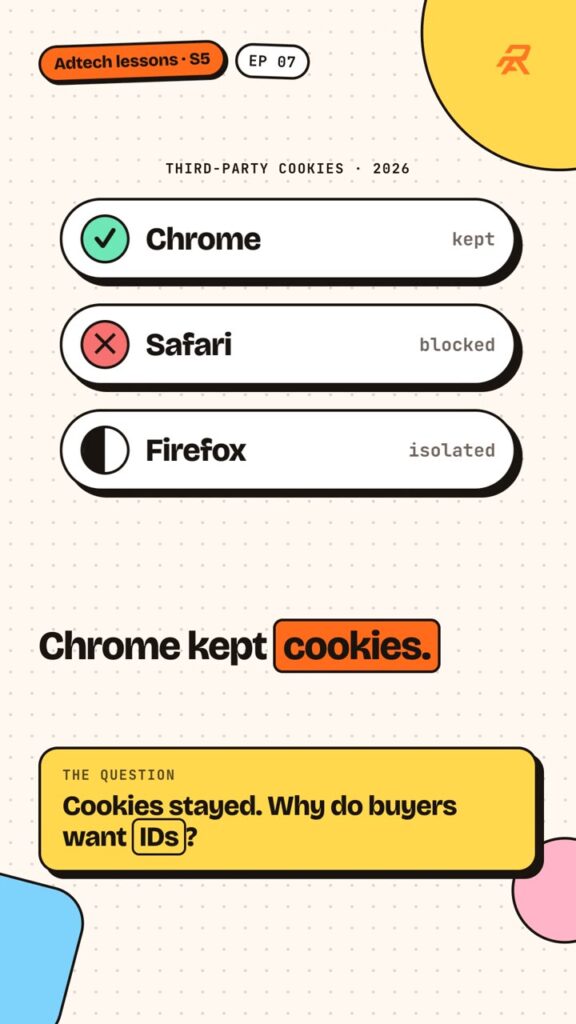 1:10Ep 7: Universal IDs: UID2, ID5, SharedID
Ep 7: Universal IDs: UID2, ID5, SharedID
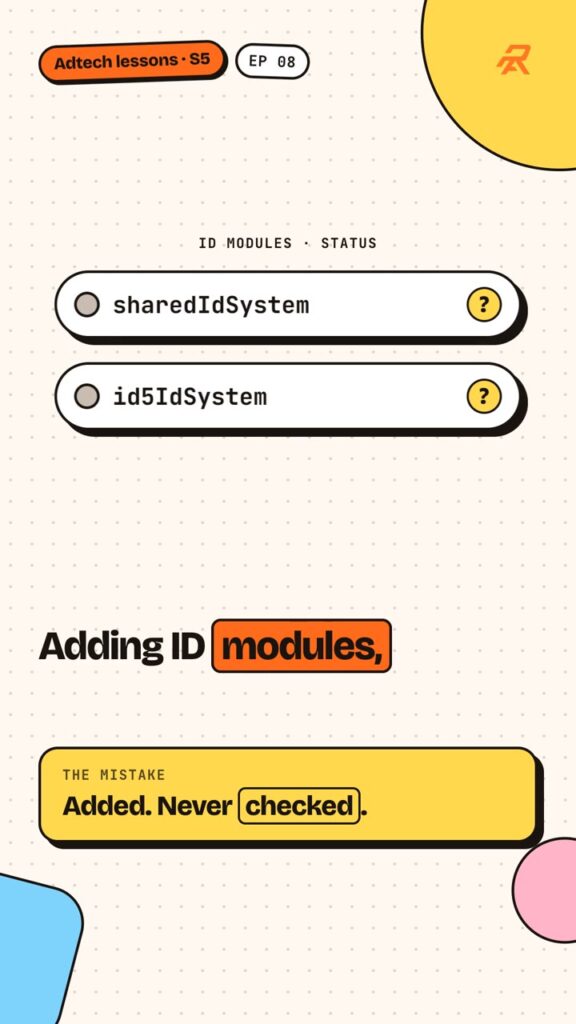 1:16Ep 8: Prebid identity modules in plain language
Ep 8: Prebid identity modules in plain language
 1:08Ep 9: Contextual targeting without IDs
Ep 9: Contextual targeting without IDs
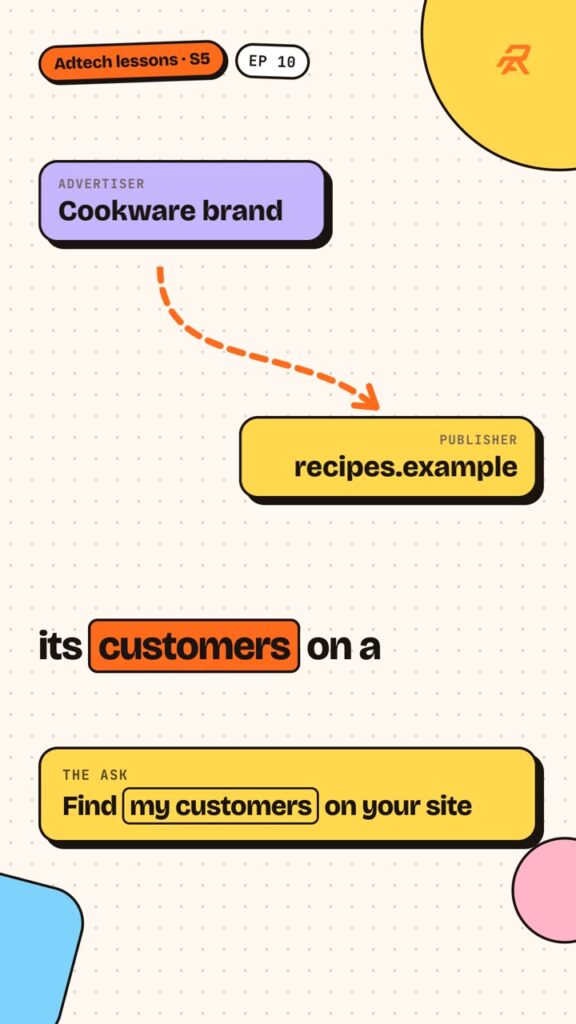 1:06Ep 10: PAIR and clean rooms
Ep 10: PAIR and clean rooms