 1:10
Ep 7: Universal IDs: UID2, ID5, SharedID
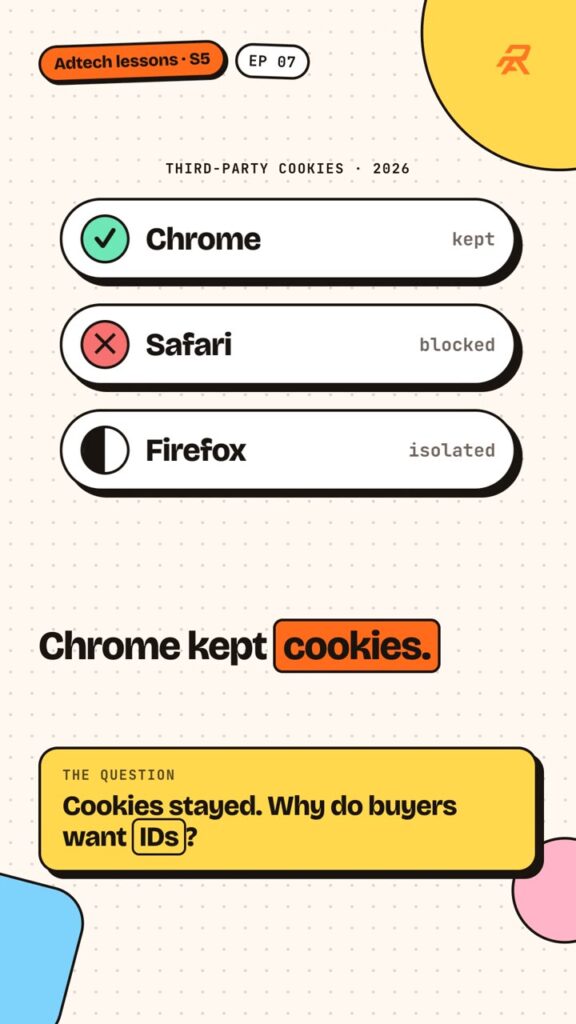
Chrome kept cookies. So why do buyers still want IDs.
Lesson notes
Chrome kept cookies. So why do buyers still want IDs.
Safari blocks third party cookies by default, and Firefox isolates them per site. A universal ID is one identifier many buyers can read.
Three, on news.example. Shared ID. Prebid stores a random ID in a first party cookie on your domain. Free, no login, but it only works on your site. ID five. You get a partner number, and ID five returns an encrypted ID from signals your page shares, like a hashed email, that works across sites. UID2, open source, from The Trade Desk. It starts from a logged-in email or phone number, hashed, salted and turned into a rotating encrypted token. Readers can opt out any time. All three ride in the bid request’s extended IDs list, tagged by source.
Today, ask which IDs your stack sends, and how many of your readers are logged in.
Next… Prebid identity modules in plain language.
 Go deeper · 4 min readUnderstanding Unified ID 2.0: A New Era of Digital Identity
Up next in this series
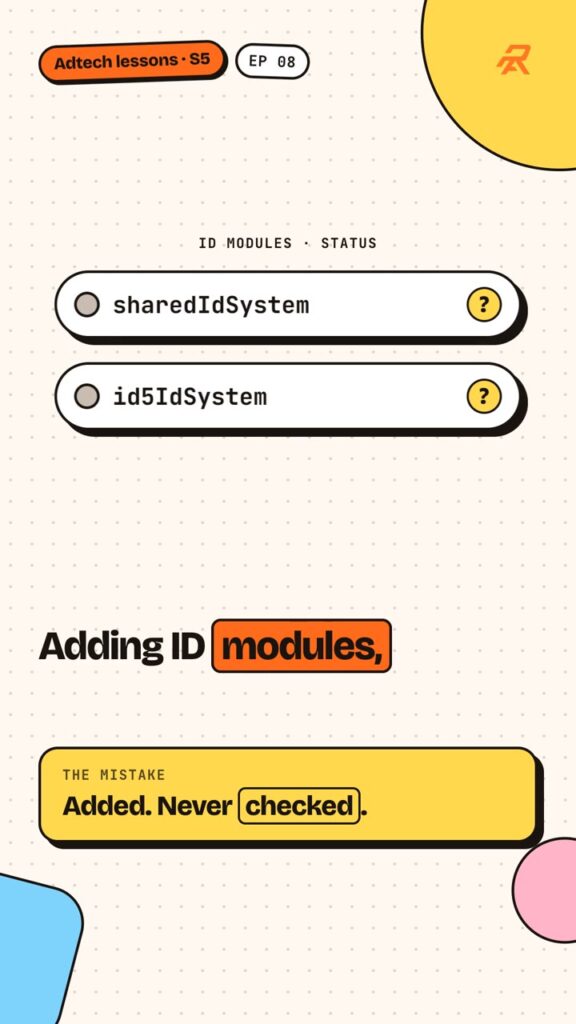 1:16Ep 8: Prebid identity modules in plain language
Ep 8: Prebid identity modules in plain language
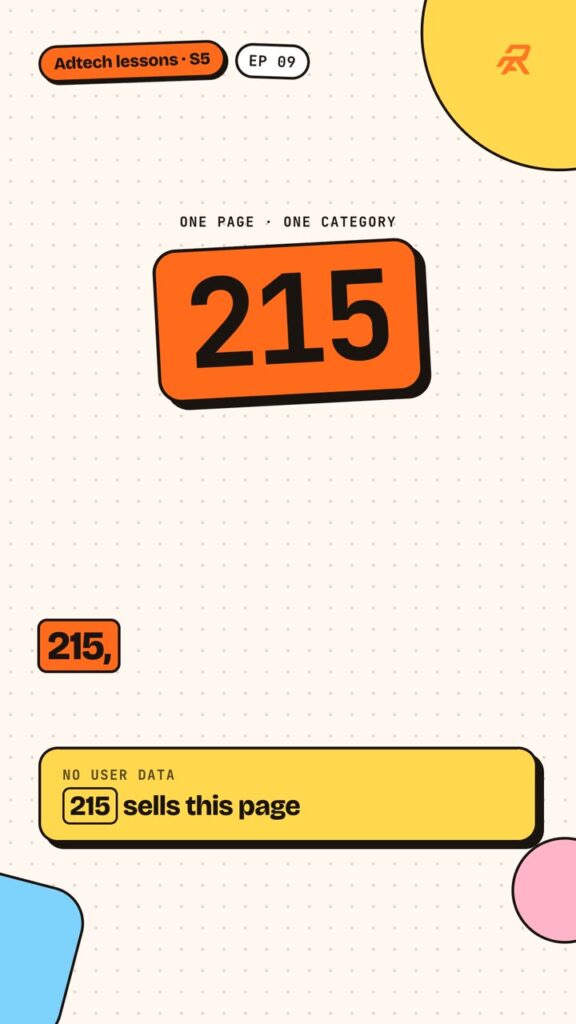 1:08Ep 9: Contextual targeting without IDs
Ep 9: Contextual targeting without IDs
 1:06Ep 10: PAIR and clean rooms
Ep 10: PAIR and clean rooms
 1:06Ep 1: CMPs and the TC string
Ep 1: CMPs and the TC string
 1:08Ep 2: TCF v2.3 and disclosedVendors
Ep 2: TCF v2.3 and disclosedVendors
 1:14Ep 3: No Google-certified CMP? No personalized ads
Ep 3: No Google-certified CMP? No personalized ads
 1:11Ep 4: US privacy: GPP replaced the US Privacy string
Ep 4: US privacy: GPP replaced the US Privacy string
 1:09Ep 5: GPC: the browser’s opt-out signal
Ep 5: GPC: the browser’s opt-out signal
 1:13Ep 6: Privacy Sandbox post-mortem
Ep 6: Privacy Sandbox post-mortem