 1:01
buyers.json and DemandChain: the buyer-side mirror
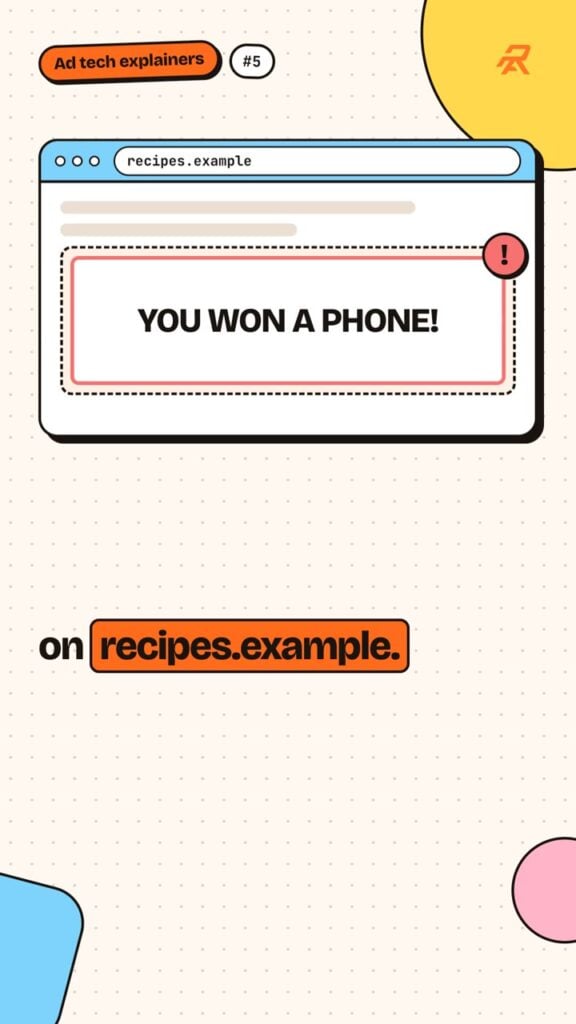
A scam ad lands on recipes.example. Who paid for it?
Lesson notes
A scam ad lands on recipes.example. Who paid for it?
Buyers.json and the demand chain, or dchain, answer that. They mirror sellers.json and schain.
Here’s the problem. A bad advertiser gets banned on one DSP, then pops up on another. Your SSP sees the DSP, not the buyer behind it. So DSPs publish buyers.json, every buyer seat with an ID and legal name. Each bid then carries a dchain. Every buying platform adds a node, its domain plus the buyer’s seat. Now your SSP can trace the ad to one named buyer, and block it. The catch? It’s from twenty twenty-one, and buy-side uptake has been slow.
When a bad ad slips through, ask your SSP for the DSP and buyer seat. Then check that DSP’s buyers.json.
Next: ads.cert, signing the bid request.
 Go deeper · 5 min readShedding Light on Digital Ads: The Crucial Role of Transparency in Programmatic Advertising
Up next in this series
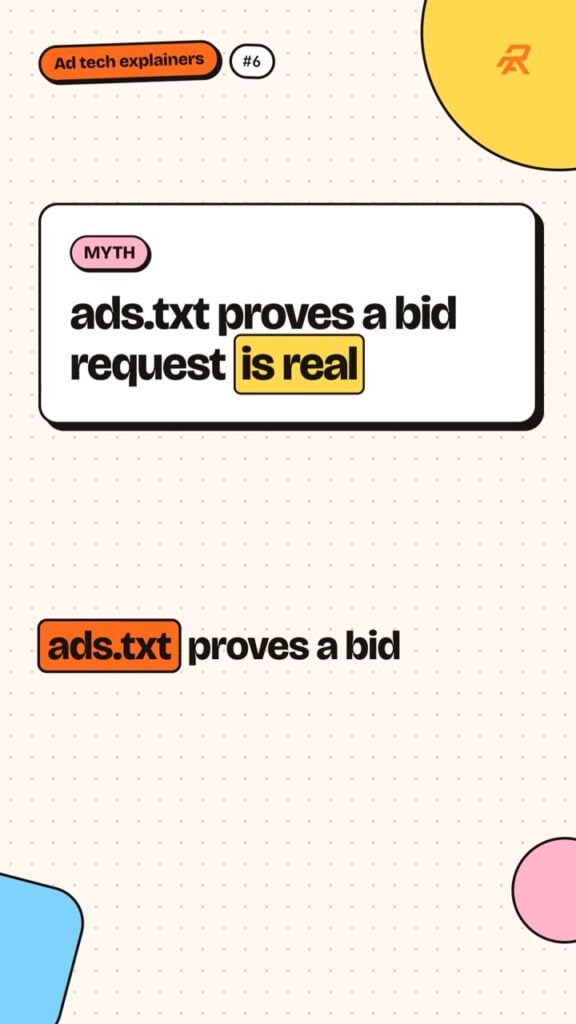 1:05ads.cert: signing the bid request
ads.cert: signing the bid request
 1:25OpenRTB started with block lists
OpenRTB started with block lists
 1:18Header bidding, in one story
Header bidding, in one story
 1:24Who actually handled this impression? (schain)
Who actually handled this impression? (schain)
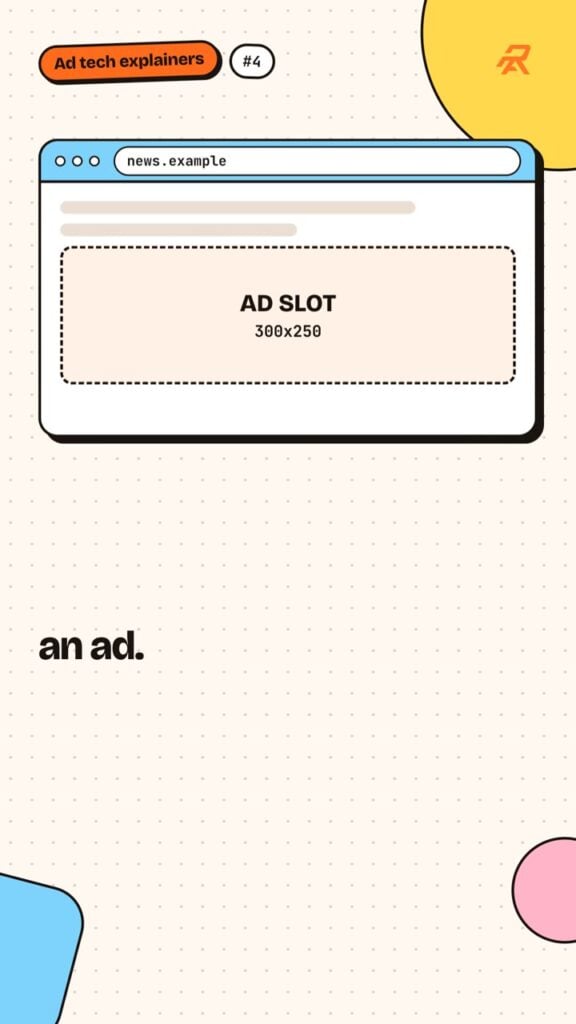 1:05Inside an OpenRTB bid request
Inside an OpenRTB bid request