 1:08
DSA transparency in the EU bid stream
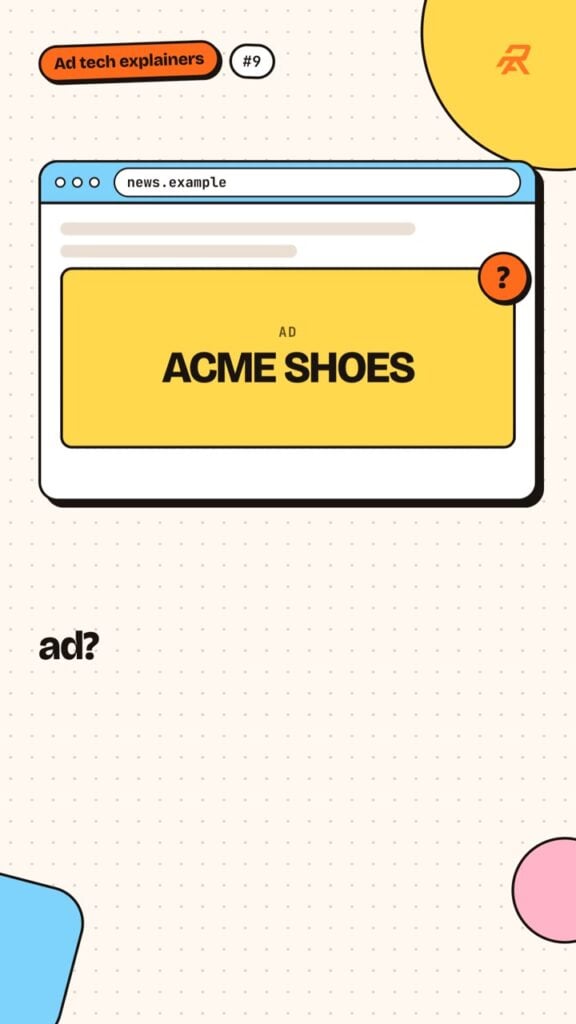
Who paid for this ad? In the EU, users must be told.
Lesson notes
Who paid for this ad? In the EU, users must be told.
The Digital Services Act, or DSA, requires it. An OpenRTB extension carries the answer.
Since February twenty twenty-four, Article twenty-six says online platforms must show users, in real time, that it’s an ad, on whose behalf, who paid, and the main targeting parameters. But programmatic pages don’t know the advertiser until the ad arrives. So the extension adds a DSA object both ways. The request says DSA required. Value two means no DSA info, no bid. The response fills in behalf and paid, say, Acme Shoes, plus parameters like profiling. Flags on each side say who displays the notice. Someone must.
Whether your site counts as an online platform is a legal question. Ask your lawyer, then ask your SSP what it sends.
Next: the IAB spiders and bots list.
Up next in this series
 1:09The IAB spiders and bots list
The IAB spiders and bots list
 1:21Agentic ad protocols: ARTF and AAMP
Agentic ad protocols: ARTF and AAMP
 1:10CoMP: getting paid when AI crawls your content
CoMP: getting paid when AI crawls your content
 1:25OpenRTB started with block lists
OpenRTB started with block lists
 1:18Header bidding, in one story
Header bidding, in one story
 1:24Who actually handled this impression? (schain)
Who actually handled this impression? (schain)
 1:05Inside an OpenRTB bid request
Inside an OpenRTB bid request
 1:01buyers.json and DemandChain: the buyer-side mirror
buyers.json and DemandChain: the buyer-side mirror
 1:05ads.cert: signing the bid request
ads.cert: signing the bid request
 1:07OM SDK: how viewability gets measured in apps
OM SDK: how viewability gets measured in apps
 1:05SHARC: the standard meant to replace SafeFrame and MRAID
SHARC: the standard meant to replace SafeFrame and MRAID