 1:12
Ep 6: MFA: how not to be mistaken for one
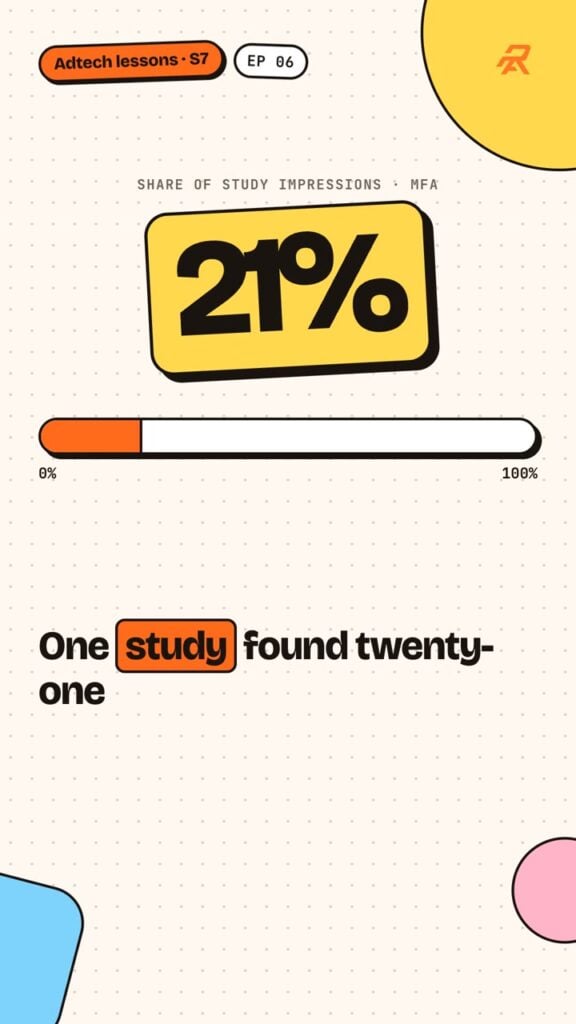
One study found twenty-one percent of impressions went to MFA sites.
Lesson notes
One study found twenty-one percent of impressions went to MFA sites.
A made-for-advertising site, or MFA, exists mainly to sell ads, not to serve readers.
That’s from the ANA’s twenty twenty-three study, so buyers now block MFA hard. That September, four advertising trade groups listed five traits. Sites usually show a mix. Score recipes.example. One, ads take about thirty percent or more of a desktop page. Two, rapid refresh, autoplay video, or slideshows splitting one recipe across ten pages. Three, mostly paid traffic, little organic audience. Four, generic, recycled content. Five, a poorly designed template. A real recipe site can trip one trait by accident. The more traits you show, the likelier verification vendors flag your domain, and buyers stop bidding.
Use the Brand Safety Institute’s free MFA lookup to see whether vendors flag your domain.
Next, brand safety versus brand suitability.
Up next in this series
 1:07Ep 7: Brand safety vs brand suitability
Ep 7: Brand safety vs brand suitability
 1:10Ep 8: Why Ad Manager and your SSP never agree
Ep 8: Why Ad Manager and your SSP never agree
 1:03Ep 9: Testing a new demand partner properly
Ep 9: Testing a new demand partner properly
 1:07Ep 10: Incremental vs cannibalised revenue
Ep 10: Incremental vs cannibalised revenue
 1:08Ep 1: Why ads slow pages, and what slow costs you
Ep 1: Why ads slow pages, and what slow costs you
 1:05Ep 2: Reserve the slot: fixing ad layout shift (CLS)
Ep 2: Reserve the slot: fixing ad layout shift (CLS)
 1:06Ep 3: Lazy loading ads without losing impressions
Ep 3: Lazy loading ads without losing impressions
 1:11Ep 4: Ad refresh: time-based vs viewable
Ep 4: Ad refresh: time-based vs viewable
 1:10Ep 5: Invalid traffic: GIVT vs SIVT
Ep 5: Invalid traffic: GIVT vs SIVT