 1:03
Ep 1: One ad, 100 milliseconds
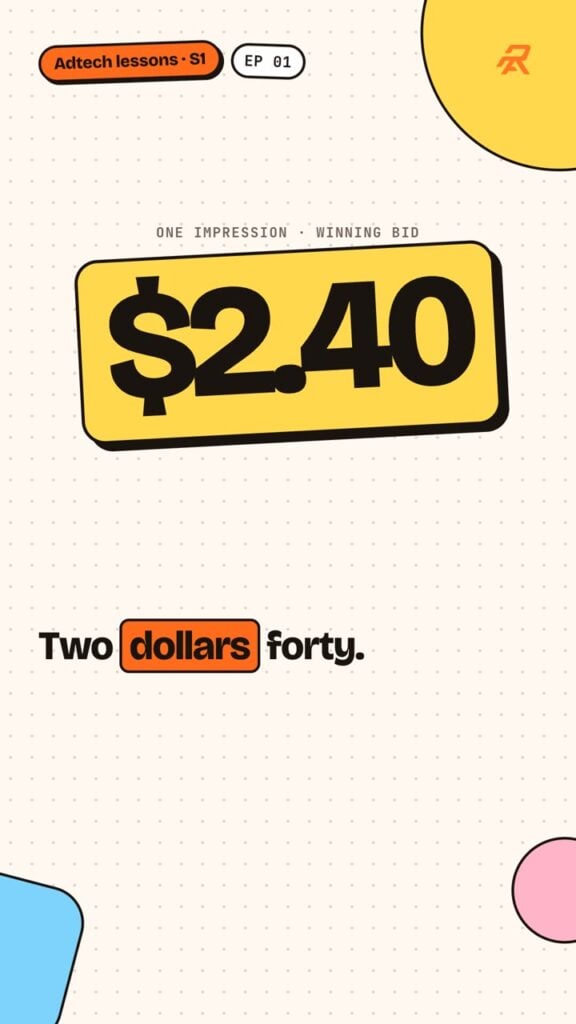
Two dollars forty. One ad, sold in milliseconds.
Lesson notes
Two dollars forty. One ad, sold in milliseconds.
This is real time bidding, an auction for one impression while your page loads.
An ad slot on news.example asks an SSP, the seller’s platform, to sell it. The SSP sends buyers a bid request, with the site, slot size, device and consent signal. Buyers’ platforms, called DSPs, get a deadline. On Google’s exchange it’s typically eighty milliseconds to one second. Three bid. One eighty, two ten, two forty, each a CPM, the price per thousand impressions. In a first price auction the top bid wins and pays what it bid. The winning ad renders. At that CPM, this one impression earned about a quarter of a cent, before fees.
Today, ask your ad ops team how long your auction waits for bids.
Next, waterfall versus header bidding, and why the order you ask in costs money.
 Go deeper · 5 min readThe Fast Lane of Digital Ads: How Real-Time Bidding is Changing the Game
Up next in this series
 1:00Ep 2: Waterfall vs header bidding
Ep 2: Waterfall vs header bidding
 0:42Ep 3: Supply path — count your hops
Ep 3: Supply path — count your hops
 1:03Ep 4: ads.txt and sellers.json, the guest list buyers check
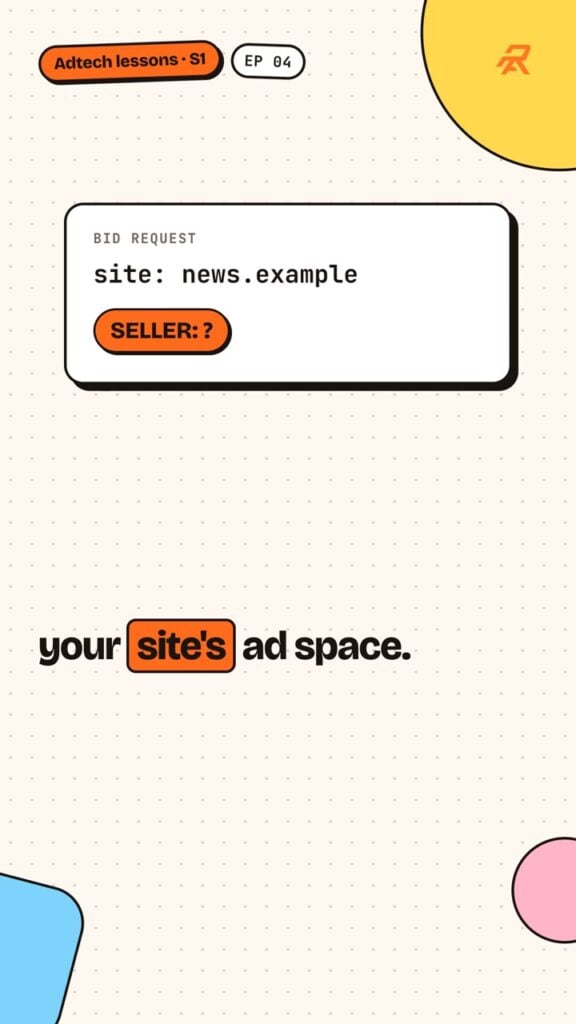
Ep 4: ads.txt and sellers.json, the guest list buyers check
 0:57Ep 5: Client-side vs server-side header bidding
Ep 5: Client-side vs server-side header bidding
 0:58Ep 6: Curate vs PMPs
Ep 6: Curate vs PMPs
 0:38Ep 7: Higher CPM, lower revenue
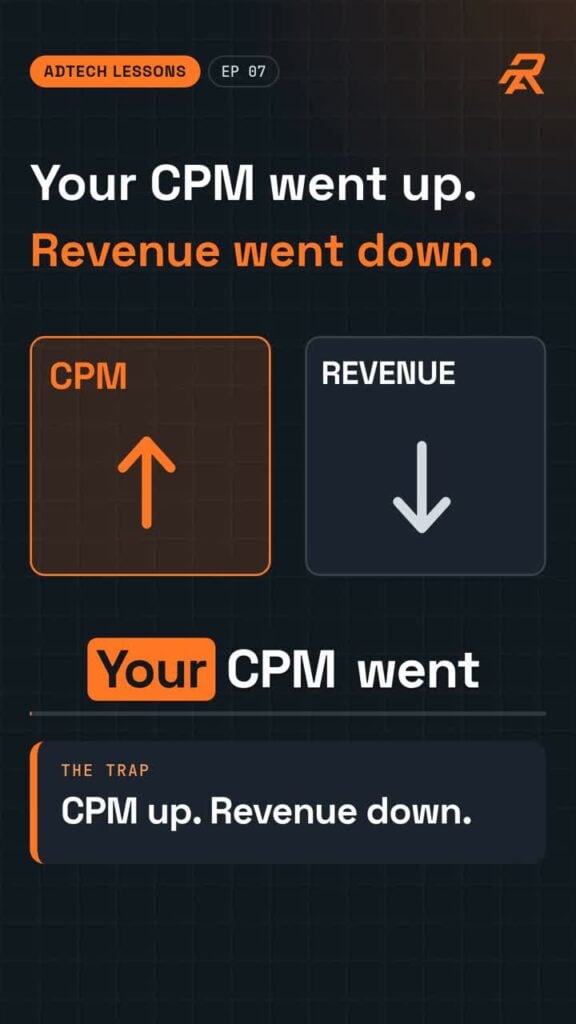
Ep 7: Higher CPM, lower revenue
 1:03Ep 8: Price floors, the number that can raise or sink revenue
Ep 8: Price floors, the number that can raise or sink revenue
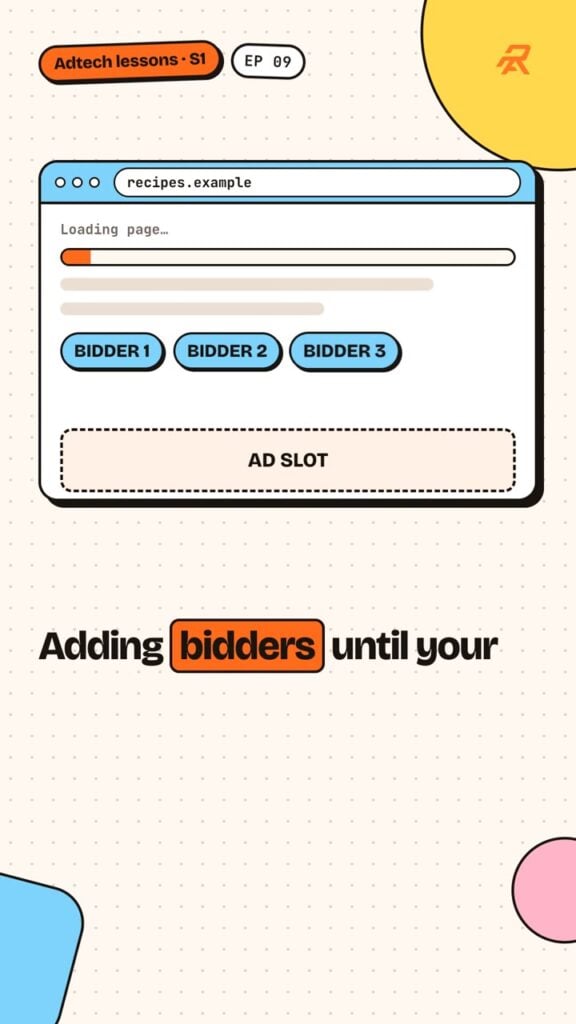 1:01Ep 9: More bidders, more revenue? Not past a point
Ep 9: More bidders, more revenue? Not past a point
 0:54Ep 10: Header bidding timeouts
Ep 10: Header bidding timeouts