 1:12
Ep 10: ATT, IDFA and SKAdNetwork
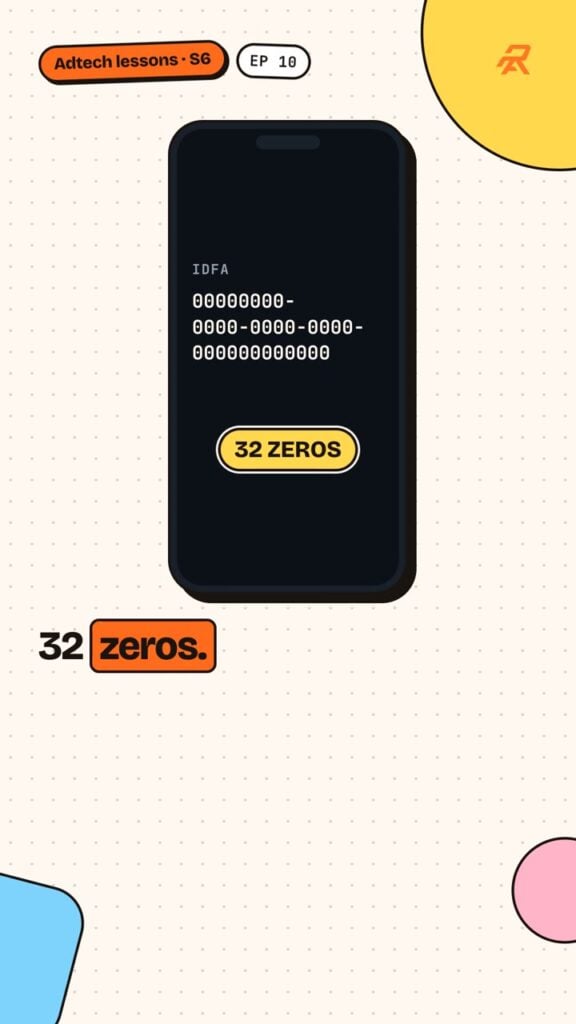
Thirty-two zeros. That's the ad ID when an iPhone user says no.
Lesson notes
Thirty-two zeros. That’s the ad ID when an iPhone user says no.
The IDFA is Apple’s advertising ID. ATT is the prompt asking to use it.
Say a Puzzle Pop user taps, ask app not to track. Now the IDFA reads all zeros. Buyers can’t link that user to past behaviour. So how do advertisers count installs? Apple’s answer is SK Ad Network, and since iOS seventeen point four, Ad Attribution Kit. The ad network signs the ad. After the user installs and opens the advertised app, the phone later sends a signed postback, with a small conversion value and no user ID. Apple’s docs now point to Ad Attribution Kit, but SK Ad Network still works, and they share network IDs. Your part is one list. Only networks named in your app’s info P-list can get credit.
Today, compare your info P-list with your mediation platform’s network ID list.
Next: Season seven, speed, quality and measurement.
 Go deeper · 6 min readMastering In-App Advertisements: Unlocking Engagement and Driving Success in the Mobile Era
Up next in this series
 1:10Ep 1: Instream vs outstream video
Ep 1: Instream vs outstream video
 1:04Ep 2: VAST: what a video ad tag actually is
Ep 2: VAST: what a video ad tag actually is
 1:09Ep 3: Ad pods: why CTV can’t auction one slot at a time
Ep 3: Ad pods: why CTV can’t auction one slot at a time
 1:16Ep 4: SSAI vs CSAI
Ep 4: SSAI vs CSAI
 1:05Ep 5: One CTV app, many supply paths
Ep 5: One CTV app, many supply paths
 1:08Ep 6: app-ads.txt for apps and CTV
Ep 6: app-ads.txt for apps and CTV
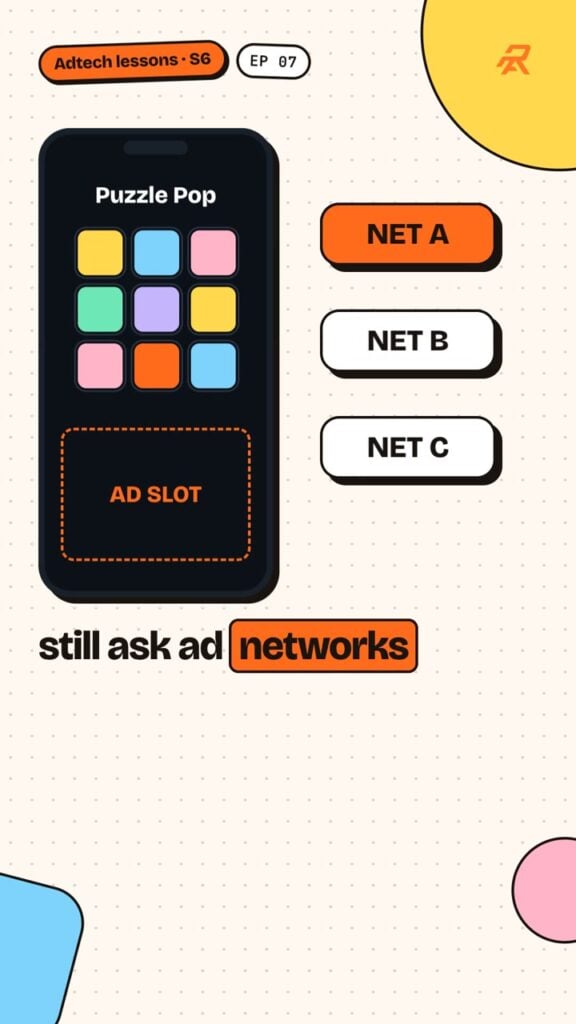 1:03Ep 7: Mediation waterfall vs in-app bidding
Ep 7: Mediation waterfall vs in-app bidding
 1:09Ep 8: AdMob, MAX, LevelPlay
Ep 8: AdMob, MAX, LevelPlay
 1:11Ep 9: Rewarded ads: the format players opt into
Ep 9: Rewarded ads: the format players opt into