 1:03
Ep 6: Dynamic allocation
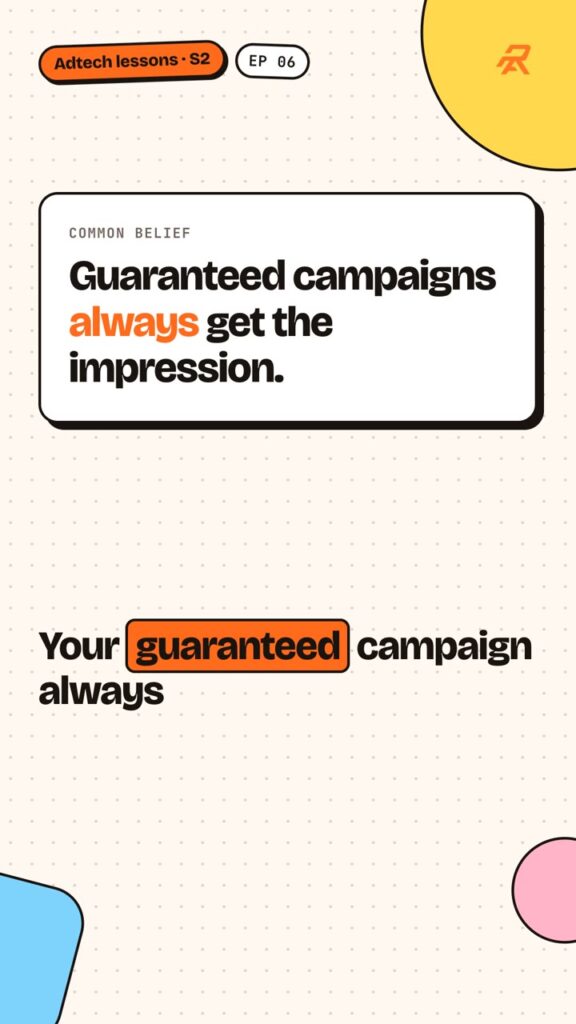
Myth. Your guaranteed campaign always gets the impression.
Lesson notes
Myth. Your guaranteed campaign always gets the impression.
Dynamic allocation lets AdX and other non guaranteed demand compete for each impression.
Take a Standard line item on news.example that’s on pace. Ad Manager gives it a temporary CPM, the opportunity cost of not serving it. Say four dollars. AdX bids six. Six beats four, so AdX takes this impression, and the campaign still has time to deliver. If the campaign falls behind, Ad Manager raises its temporary CPM, so it wins more often and finishes on time. Remnant line items at priority twelve get no temporary CPM. AdX simply competes with the highest priced one. A one fifty line item beats a one twenty AdX bid.
Check pacing on your guaranteed line items. On track, with AdX winning some impressions, means it’s working.
Next, Open Bidding, Google’s own server side header bidding.
 Go deeper · 4 min readIntroduction to DoubleClick for Publishers (DFP)
Up next in this series
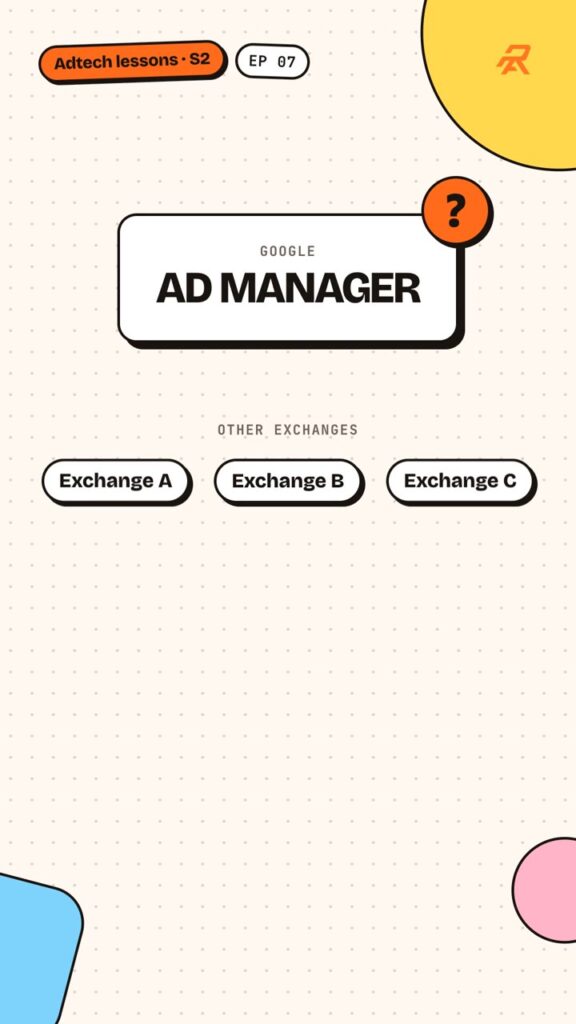 1:03Ep 7: Open Bidding, Google’s server-side header bidding
Ep 7: Open Bidding, Google’s server-side header bidding
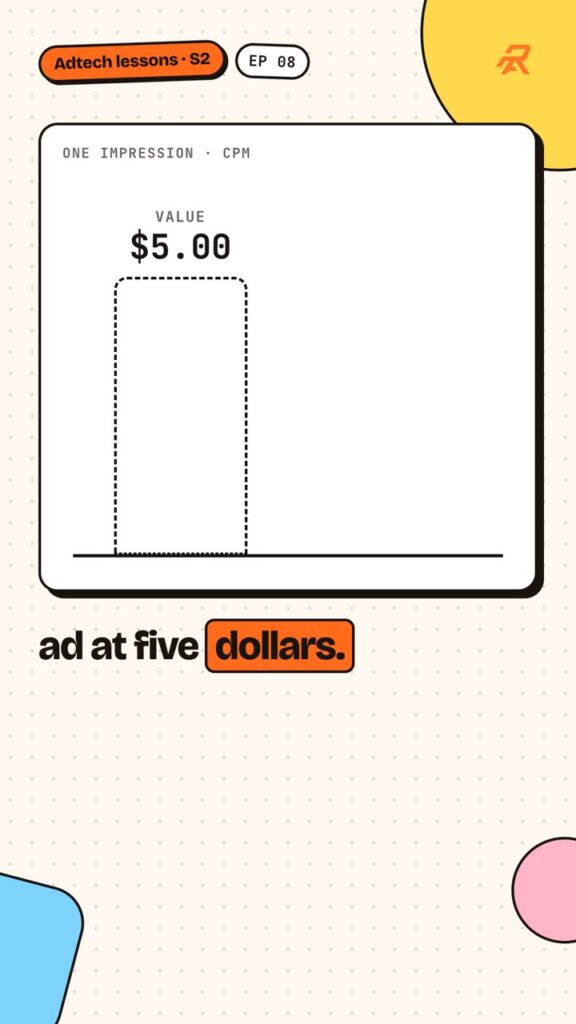 0:57Ep 8: First-price auctions and bid shading
Ep 8: First-price auctions and bid shading
 1:07Ep 9: Pricing rules after the Google ruling
Ep 9: Pricing rules after the Google ruling
 1:03Ep 10: Protections and blocks
Ep 10: Protections and blocks
 1:05Ep 1: AdSense vs Ad Manager vs AdX
Ep 1: AdSense vs Ad Manager vs AdX
 1:07Ep 2: How a page asks for an ad: the GPT tag
Ep 2: How a page asks for an ad: the GPT tag
 1:05Ep 3: Orders, line items, creatives
Ep 3: Orders, line items, creatives
 1:06Ep 4: Line item priorities
Ep 4: Line item priorities
 1:00Ep 5: Key-values: how header bidding talks to Ad Manager
Ep 5: Key-values: how header bidding talks to Ad Manager